
The Western Sydney Regional Organisation of Councils (WSROC) received a Local Government Capability Grant from LGP to deliver a learning forum on circular procurement for Western Sydney
councils. WSROC has been working with eight councils in the region to collaborate towards implementation of circular procurement. A key request of councils to support this implementation has
been for a forum that brings staff from across councils together to share ideas and learnings from implementation to assist other councils progress circular procurement in their organisation.
What were the event objectives and seek to achieve?
There was no specific forum on circular procurement specifically for councils, and councils had requested an event that fostered knowledge sharing, skill building and collaboration on circular procurement practices. Previous research had shown the difficulty implementing change in in council processes specifically due to the wide number of staff with different skills and responsibilities making purchasing decisions and impacting the adoption of circular practice. As a result, the key objectives of the forum were:
- Provide an understanding of circular procurement and how it benefits councils
- Provide a series of case studies from councils or similar organisations who changed internal processes or materials specifications leading to improved circular outcomes
- Provide a chance to meet staff in neighbouring councils who undertake similar roles and facilitate networking and ongoing sharing of progress between councils.
How was the event delivered?
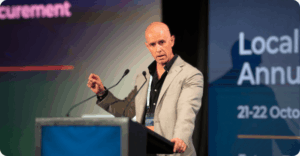
WSROC delivered a one-day event in Merrylands that enabled in person attendance and networking. The event was crafted to specifically address core knowledge barriers including executive buy-in, tools and policies available to councils, changes to material specifications and achieving material avoidance in purchasing.
WSROC was able to expand invitations for the event to councils across Greater Sydney. The forum had 56 attendees from 15 councils and were joined by presenters and participants from other relevant organisations including the NSW Department of Climate Change, Energy, the Environment and Water, Bradfield Development Authority, NSW EPA and other local regional organisations of councils.
The event featured a mixture of presentations, activities an networking opportunities between councils and government, and looked internally at council processes and decisions, and externally to market offerings, interventions and partnerships.
WSROC promoted the event through the Western Sydney Circular Procurement Working Group and WSROC GMs/CEO’s forum, which collectively ensured the event was promoted to staff working throughout councils’ business units. Event attendees included staff from procurement, governance and executive, architectural, strategic planning, sustainability and circular economy functions of councils.
Local Government Procurement provided additional support to this event through on day program presentations, promoting the event through procurement networks and professional expertise in the event program development.
Anticipated or proven benefit for community/Council
Many council staff highlighted that this was the first forum they had attended where all circular procurement presentations and case studies were specifically tailored to local government. Attendees
also noted that they particularly valued the opportunities for knowledge sharing and networking throughout the event.
WSROC conducted surveys of participant knowledge before and after the forum. The survey results indicate that the forum has delivered clear and measurable benefits for participating councils, particularly in building capacity and confidence in circular procurement implementation.
Prior to the forum, over 42% of attendees declared that they had only limited or no understanding of circular procurement, which highlighted a strong need for the capacity building. The post survey results show that more than 83% of attendees think they have a reasonable understanding of the circular procurement. In addition, only 12% of attendees reported being confident to implement circular procurement in their area of responsibility prior to the forum, and none indicated that they had made good progress. Following the forum, this increases significantly, with more than 33% of attendees expressed their confidence to implement the circular procurement in their area of responsibility and 17% reported they had made a good progress in this space after the forum.
The increase in post-event confidence demonstrates that the forum successfully equipped council staff with the knowledge, skills and motivation to embed circular economy outcomes into procurement
processes. This uplift in capability within councils is expected to support councils’ transitions to circularity, reduce waste generated, and deliver long-term environmental and economic benefits to their community.